Horses Guiding Humans currently works with several models of Equine Assisted Services, including EAGALA and ARCH. Through these models, we offer Equine-Assisted Learning (EAL) and Equine-Assisted Psychotherapy/Mental Health (EAP/EAMH) services.
Why Horses?
In two words: STRONG OUTCOMES. Equine-assisted work often helps clients change and grow more effectively and quickly than traditional clinical and psycho-educational approaches.
That’s because people typically learn best by doing. Life lessons take deeper root when individuals both understand them in their heads and experience them in their bodies. Working with horses is engaging, real time and hands-on. The experience is immediate and fully felt.
Horses are large and powerful. This creates a natural opportunity for some to overcome fear and develop confidence. Working alongside a horse, in spite of those fears, creates confidence and provides wonderful insight when dealing with other intimidating and challenging situations in life.
Horses are social animals, with defined roles within their herds. They would rather be with their peers. They have distinct personalities, attitudes and moods; an approach that works with one horse won’t necessarily work with another. At times, they seem stubborn and defiant. They like to have fun. In other words, horses are a lot like us socially – when we work on our relationships with them, we in turn are learning how to improve our relationships with others.
Horses respond with unique insight into exactly who we are in the moment. They are profoundly gifted reflectors of our true selves because their very survival depends on reading us right.
Because they can read and respond to the nonverbal messages we are always sending, they begin to act in ways that feel familiar to other relationships or dynamics in our lives. They can become our spouse, partner, colleague, children, dreams, fears, addictions, etc. and begin to act out these very dynamics in our lives. This gives us a chance to work through those relationships and issues in a safe and nonjudgmental environment.
Clients repeatedly report that the horses seem to act and be exactly what is needed in the moment.
What is Equine-Assisted Pyschotherapy / Mental Health?
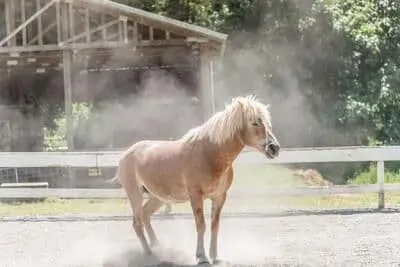
The term “Equine-Assisted Mental Health” is sometimes used synonymously with “Equine-Assisted Psychotherapy” or “Equine-Assisted Counseling” to broadly describe including horses in mental health services (Hallberg, 2018).
What is Equine Assisted Learning?
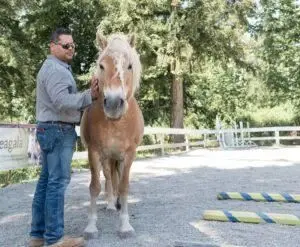
Equine-Assisted Learning (EAL) is a non-therapy, skills-based service that focuses on teaching life skills, social skills, communication skills, or leadership skills while facilitating personal growth and increased self- awareness through interactions with horses.
Services are provided by educators both credentialed and non-credentialed, life or professional development coaches, spiritual guides, riding instructors, horse professionals, and others.
“Equine-facilitated learning”, “equine-assisted coaching”, and “equine-facilitated human development” are terms that may be used interchangeably to describe non-therapy equine-assisted services of this nature (Hallberg, 2018).
Models & Organizations for Equine-Assisted Activities
Officially, the field of equine-assisted activities is not formally regulated, and many modalities and philosophies can be applied to the work we do. Several major organizations have focused on research, training, and professional development to support the validity, consistency, and accountability of services involving horses.
Working with facilitators trained in any model in equine-assisted services, clients find the multi-faceted process that unfolds in each session is deep, rich, and rewarding long after the client has left the farm. We look forward to sharing this process with you!
EAGALA
Horses Guiding Humans has partnered extensively with the Equine Assisted Growth and Learning Association (EAGALA) and most of our work has been based in the EAGALA model ever since we began. Our founder, Sholeh, has been certified in EAGALA since 2002.
The EAGALA Model is highly professional.
EAGALA is the leading association offering a fully-developed, professionally endorsed treatment model for mental health professionals practicing equine-assisted psychotherapy. The EAGALA model stands alone in the world of equine-assisted psychotherapy and personal development because of the model’s standards, code of ethics, continuing education requirements, replicable framework, and team approach.
Under the EAGALA model, both a registered, credentialed Mental Health Professional and a certified Equine Specialist work together collaboratively at all times to assure clients get the therapeutic attention and support they need as they make life changes.
The most effective work happens on the ground.
The EAGALA Model involves no riding or horsemanship, making it both safe and effective. Clients work directly with horses face-to-face on the same footing. This ground level work enables clients to better perceive the horses’ actions and reactions as they work to process and solve their life challenges.
Under the trained eye of the EAGALA Treatment Team, horses offer clients honest feedback and usable information that helps them understand how their process and actions affect others and impacts their lives.
The EAGALA Model is client-centered and solution-oriented.
The work is built on the premise that it’s the clients who best determine the kinds of life changes they need to make in order to improve their lives. The job of the EAGALA treatment team is to put the EAGALA Model to work to meet the clients’ goals by engaging the unique intuitive power of horses to help them understand their process and practice the changes they want to make in a safe, supportive setting.
Solution-oriented for all ages
We believe that clients of all ages and needs truly have their own best solutions. As the horses play out scenarios, clients gain insights and begin to see and feel shifts in themselves as well.
Source: http://home.eagala.org/about/m...
ARCH
Arenas for Change (ARCH) is another organization offering a model for therapists, coaches, educators, and equine professionals to utilize in EAP/EAL as well as other nature-based settings.
ARCH’s transformative model is based on principles including “sense of self,” empowerment, externalizing stories, and finding flow. ARCH approaches sessions with a narrative therapy orientation, with emphasis on the arc and “characters” of our own story.
“The ARCH Facilitation Framework allows sessions to unfold naturally and collaboratively, creating a fluid and engaging process that builds momentum and fosters deeper client breakthroughs. Rather than prescribing rigid interventions, ARCH honors [providers’] unique facilitation style and approach, empowering you to integrate your expertise in a way that feels authentic, intuitive, and effective.” (ARCH website).
You can find out more about ARCH here: https://arenasforchange.com/

EquiLateral Equine-Assisted EMDR
Eye Movement Desensitization and Reprocessing (EMDR) is a highly effective therapeutic modality for treating symptoms of trauma and PTSD, utilizing bilateral stimulation and a structured series of sessions to heal and reduce distress related to traumatic memories. Sarah Jenkins created EquiLateral to bring the practice of EMDR into spaces with horses. Horses are a part of the experience as unique witnesses, storytellers, mirrors, and more.
"EMDR is a structured therapy that encourages the patient to focus briefly on the trauma memory while simultaneously experiencing bilateral stimulation (typically eye movements), which is associated with a reduction in the vividness and emotion associated with the trauma memories. Eye Movement Desensitization and Reprocessing (EMDR) therapy is an extensively researched, effective psychotherapy method proven to help people recover from trauma and PTSD symptoms. Ongoing research supports positive clinical outcomes, showing EMDR therapy as a helpful treatment for disorders such as anxiety, depression, OCD, chronic pain, addictions, and other distressing life experiences (Maxfield, 2019). EMDR therapy has even been superior to Prozac in trauma treatment (Van der Kolk et al., 2007). Shapiro and Forrest (2016) share that EMDR therapists in 130 countries have successfully treated millions." (EMDRIA website).
https://www.emdria.org/resourc...
"Sarah Jenkins’ EquiLateral® premiered Equine-Assisted EMDR to the EMDR as well as the field of animal-assisted therapy. EquiLateral® also offers the first manualized, phased, equine-assisted trauma treatment model to be informed by an existing research-based standard of practice in trauma treatment. Through the protocol, therapists and their clients are offered an experiential approach to EMDR therapy, where the integration of EMDR therapy with equine-assisted interactions is rooted in the Adaptive Information Processing Model (AIP)." (EquiLateral website.)
At Horses Guiding Humans, we have several providers who are trained in EA-EMDR and can offer these sessions out at our farm.
Find out more about EquiLateral EA-EMDR: https://eaemdr.com/